
Direct Food Contact Inks and Coatings (DFC)
DFC Inks & Coatings: Unlocking Sustainable Interior Printing
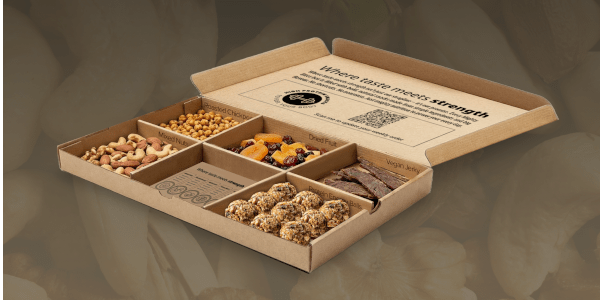 Transform fiber-based packaging with Direct Food Contact (DFC) inks and coatings. Our DFC technology offers interior pack printing without the need for laminates or plastic inserts. By choosing DFC ink technology, manufacturers can create compliant, appealing and sustainable packaging while gaining operational and market advantages.
- Unlock inside print for promotions, messaging, and immersive brand experiences
- Simplify recycling
- Reduce material consumption
- Lower production steps
- Mitigate EPR fees
- Compliant with EU food packaging regulations
Enhance Sustainability with DFC Inks & Coatings
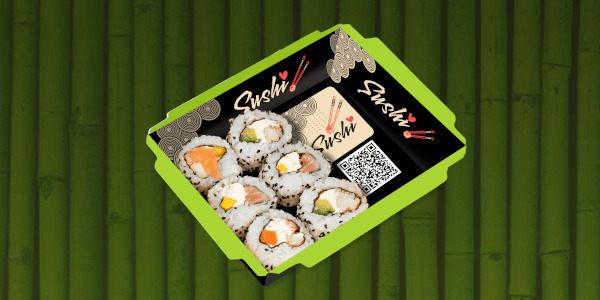 Sustainability is a key market driver in paperboard packaging manufacturing. Consumers lead the narrative on plastic reduction with 70-80% of consumers willing to pay more for sustainable products.
Brands are looking for solutions that can support this, and direct food contact inks and coatings are ideally placed to do this, by eliminating plastics previously required as a barrier. Removing plastics and enabling simplified recyclable design, recycling rates can be increased reducing the carbon footprint of the recycling process. This further enhances the sustainability of DFC technology.
Swapping from internal print and lamination to DFC ink technology can allow for EPR fee mitigation, changing the base fee classification from fiber-based composite to paper and card.
Evolve Customer Branding with Interior Printing
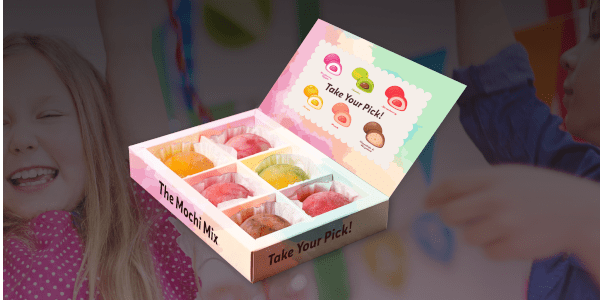 Create opportunities for your customers to turn packaging into an enhanced consumer experience, with DFC inks and coatings.
Packaging is the first point of engagement with the consumer; it creates instant recognition and differentiates products in crowded markets. DFC inks and coatings provide a sustainable solution to take the brand experience further through internal printing without the requirement of additional barriers between the food and the packaging.
Brand evolution through internal print offers opportunities for:
- Enhanced brand messaging, creating immersive brand experiences
- Additional product details such as flavors or nutritional benefits
- Consumer engagement through competitions and promotions
Streamlining Manufacturing with Efficient Production, and Simplified Compliance
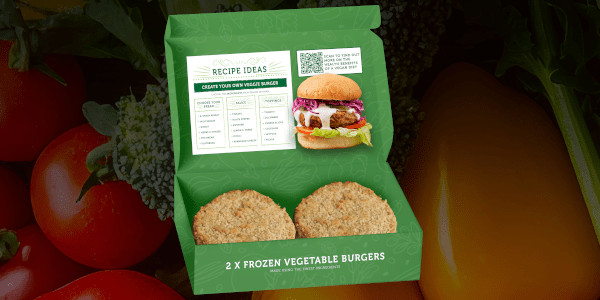 Production efficiencies can be achieved by replacing laminates and inserts with DFC inks and coatings for internal printing.
Customers are seeking packaging differentiation, and internal printing is an increasingly popular approach. Traditionally, laminates form a barrier between the product and interior print to protect food from ink and maintain packaging integrity. Using inline‑applied DFC inks and coatings to create a food‑safe barrier delivers several manufacturing benefits:
- Fewer materials
- Greater efficiency and reduced production time through streamlined processes
- Simplified global regulatory compliance
- Improved food safety by minimizing ink migration
Case Study: Whitakers Chocolates
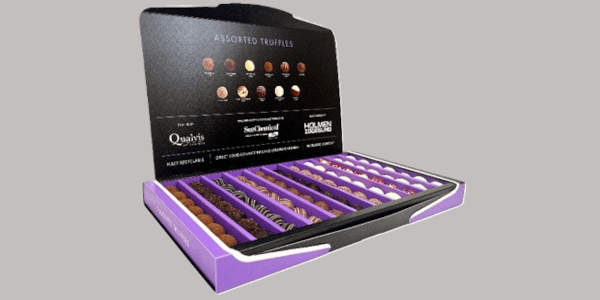 Whitakers Chocolates wanted to develop a more sustainable solution for its premium truffle range. The incumbent pack contained 55% plastic and was printed with UV curing inks and varnish making them complicated for the consumer to recycle.
Working in collaboration with manufacturer Qualvis Packaging and inks and coatings provider Sun Chemical, a new solution was developed to align the brand’s premium positioning with its sustainability goals. The result was a fully recyclable, fibre-based pack using Direct Food Contact Ink Technology.
The Results
- Single material pack design
- Maintained food safety and compliance
- Reducing plastic from 55% to a lightweight fibre-based solution
- Consistency of branding inside and out with vibrant and intense colour
- Retained premium product look and feel